
Blog
How to Identify Fake Social Media Profiles and Online Scams?
You get a friend request from someone attractive, friendly, and strangely interested in you. Or a “recruiter” offers a work-from-home job paying ₹5,000 a day. A few messages later, someone asks for money, an OTP, or a “small registration fee.”
This is how most fake social media profiles work. They build trust first and take money, data, or emotional control later. This guide explains how to identify fake social media profiles, the common online scams in India, and what to do if you are already a victim.
In this guide
What Is a Fake Social Media Profile?
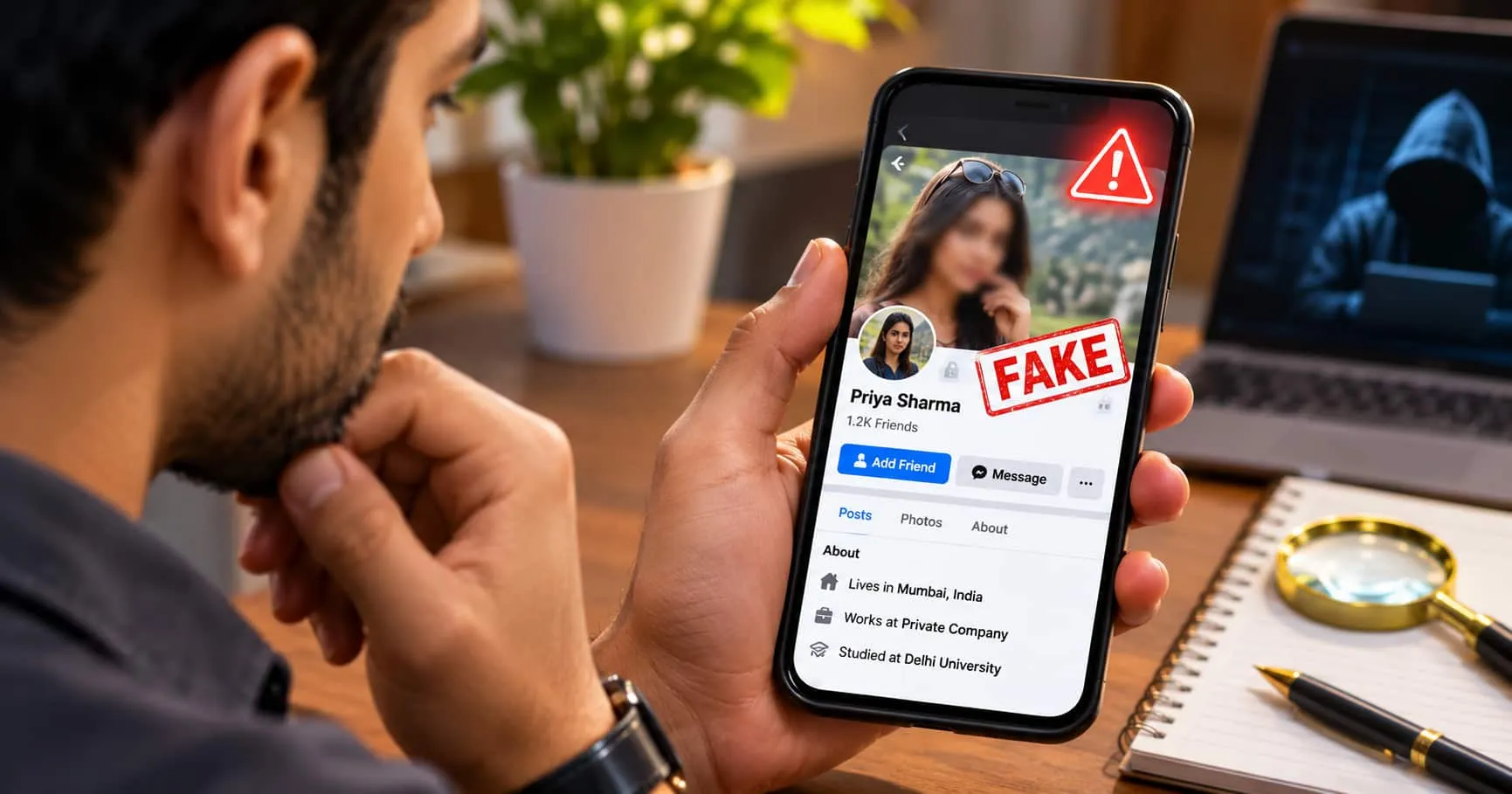
A fake social media profile is an account created with false or stolen details to deceive people. It may use someone else’s photos, an invented identity, or a cloned copy of a real person’s account. Scammers use them for romance and matrimonial fraud, investment and trading scams, job and loan fraud, blackmail and sextortion, impersonating friends or officials, and collecting personal data for identity theft.
How to Identify Fake Social Media Profiles: 10 Red Flags
Quick answer: A profile is likely fake if it has stolen or overly perfect photos, a new account with few posts, a sudden push to move to WhatsApp or Telegram, and early requests for money or personal details.
1. The photo looks too perfect, or is stolen
Fake accounts often use model-style photos taken from other people. Run a reverse image search (Google Lens or TinEye). If the same photo appears under different names, the profile is fake.
2. The account is new and thin
Look for a recent creation date, very few posts, no tagged photos, and no real interaction from friends. Genuine accounts usually have history, comments, and mutual connections.
3. Followers and friends look unnatural
Thousands of followers with almost no engagement, or a friend list full of similar-looking profiles, points to bought or fake followers.
4. The story does not add up
Someone claiming to be a doctor abroad, an army officer, or an NRI businessman, but giving inconsistent details about work, location, or education, deserves suspicion.
5. They move too fast emotionally
Declaring love, calling you “my life,” or sharing a sad story within days is a classic romance scam pattern.
6. They refuse live video calls
Scammers avoid real-time video because it exposes their identity. Repeated excuses such as a “bad camera” or “poor network” are a serious warning sign.
7. They push you off the platform
A quick request to shift to WhatsApp, Telegram, or a private link is a tactic to escape the platform’s safety systems.
8. Their language feels off
Poor grammar, copy-pasted messages, or a mismatch between the claimed location and the way they write can signal a scripted account.
9. They create urgency or fear
“Pay now or lose the offer,” “your account will be blocked,” or “legal action will be taken” are pressure tactics. Real organisations do not work this way.
10. They ask for money, OTPs, or documents
This is the biggest red flag. Never share OTPs, UPI PINs, Aadhaar or PAN copies, or card details with someone you met online.
Common Online Scams in India
|
Scam type |
How it works |
|---|---|
|
Romance / catfishing |
A fake partner builds emotional trust, then asks for money for an “emergency.” |
|
Job and work-from-home |
You pay a registration or training fee for a job that does not exist. |
|
Investment / crypto |
Fake profiles promote guaranteed high returns through “tips” groups. |
|
Impersonation |
A cloned profile of your friend or relative asks for urgent money. |
|
Sextortion |
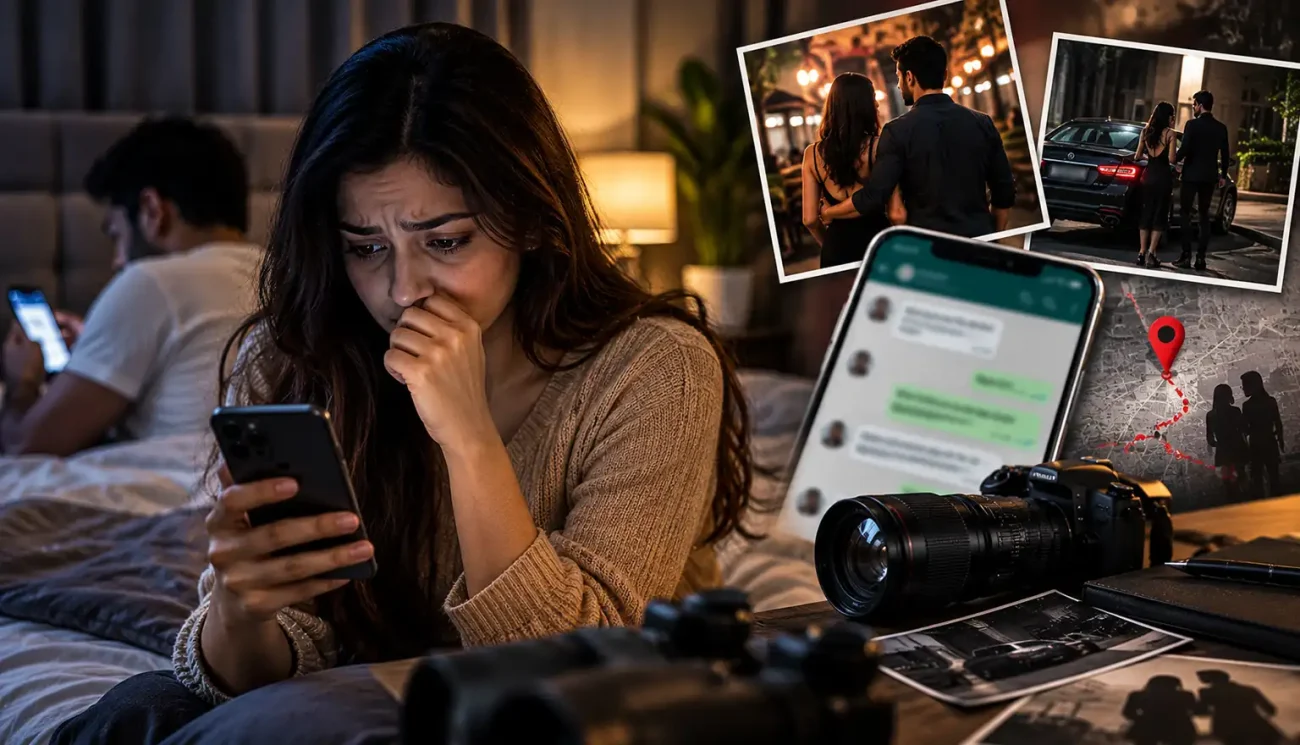
A fake profile gets you on video, records it, and threatens to leak it. |
|
Loan app and KYC fraud |
Fake links ask you to “update KYC” to steal banking details. |
|
Matrimonial profile fraud |
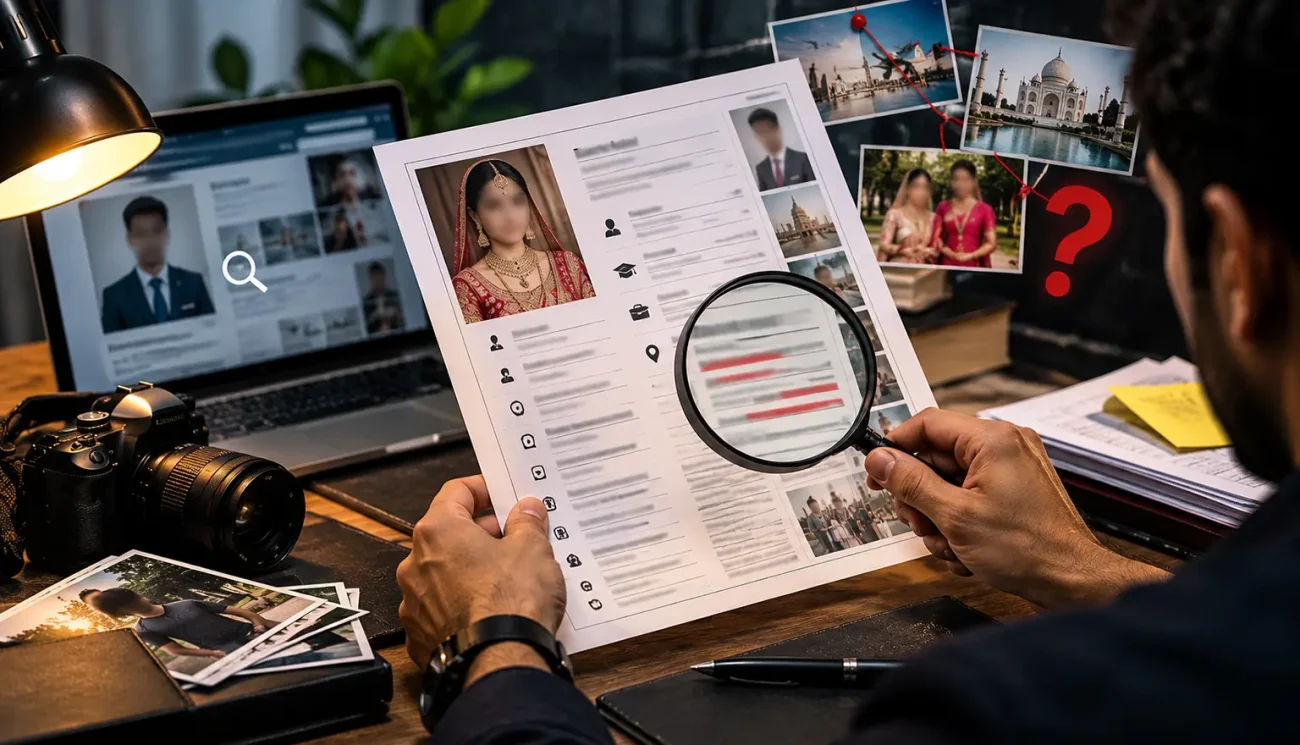
A false profile shows a fake job, income, or marital status. |
How to Check If a Social Media Profile Is Real
- Reverse-search the photos using Google Lens or TinEye.
- Review the account history: join date, posting pattern, and comments.
- Check mutual connections. Real people usually share some.
- Search the name and details on Google, LinkedIn, and other platforms.
- Ask for a spontaneous video call. A genuine person will agree.
- Verify the employer or institution through official websites or phone numbers.
- Never send money first. Verification always comes before trust.
What to Do If You Have Been Scammed Online in India
Act quickly, because the first hours matter most.
- Stop all communication and do not delete anything. Chats, screenshots, profile links, payment receipts, and phone numbers are evidence.
- Call 1930, India’s national cyber crime helpline, as soon as money is lost. Early reporting improves the chance of freezing the transaction.
- File a complaint on the National Cyber Crime Reporting Portal (cybercrime.gov.in).
- Inform your bank immediately and request a block or chargeback.
- Report the profile to the platform (Instagram, Facebook, WhatsApp, or LinkedIn).
- Secure your accounts by changing passwords and enabling two-factor authentication.
When Should You Hire a Professional Investigator?
Platform reports and police complaints do not always reveal who is behind a fake account. Professional help makes sense when:
- You face blackmail, sextortion, or online harassment
- A fake profile is impersonating you or your business
- You want to verify a prospective spouse’s online identity before marriage
- You suspect a partner, employee, or business contact is hiding behind a fake identity
- You need properly documented digital evidence for legal use
At Confidential Case Files, our social media investigation and cyber crime tracking teams trace the activity behind suspicious accounts using lawful methods only, and deliver a dated, structured report your lawyer can use. We also support digital footprint investigation and pre-matrimonial investigation for families who want to verify an online match before saying yes. Every case runs under a written confidentiality commitment.
How to Protect Yourself From Fake Profiles and Scams
- Keep your accounts private and limit what strangers can see
- Accept requests only from people you know or can verify
- Never share OTPs, passwords, or banking details
- Be cautious of “guaranteed returns” and “easy income” offers
- Use two-factor authentication on every account
- Talk to a family member or friend before sending money to anyone online
Frequently Asked Questions
Check for stolen photos with a reverse image search, a very new account, few real interactions, and a story that does not add up. Requests for money or a quick move to WhatsApp are strong warning signs.
Often, yes. Cyber crime units and professional investigators can trace digital activity using lawful methods, though success depends on how quickly the case is reported and how much evidence is preserved.
Report it on the platform itself, file a complaint at cybercrime.gov.in, and call the 1930 helpline if money was lost.
Final Thoughts
Fake social media profiles succeed because they feel personal. The safest habit is simple: verify before you trust, and never pay or share data first.
Suspect a fake profile or online scam?
Do not handle it alone. Get a confidential consultation from our cyber investigation team, available across Mumbai and PAN India.