
Personal Investigation

How to Conduct a Background Check on a Prospective Bride or Groom?

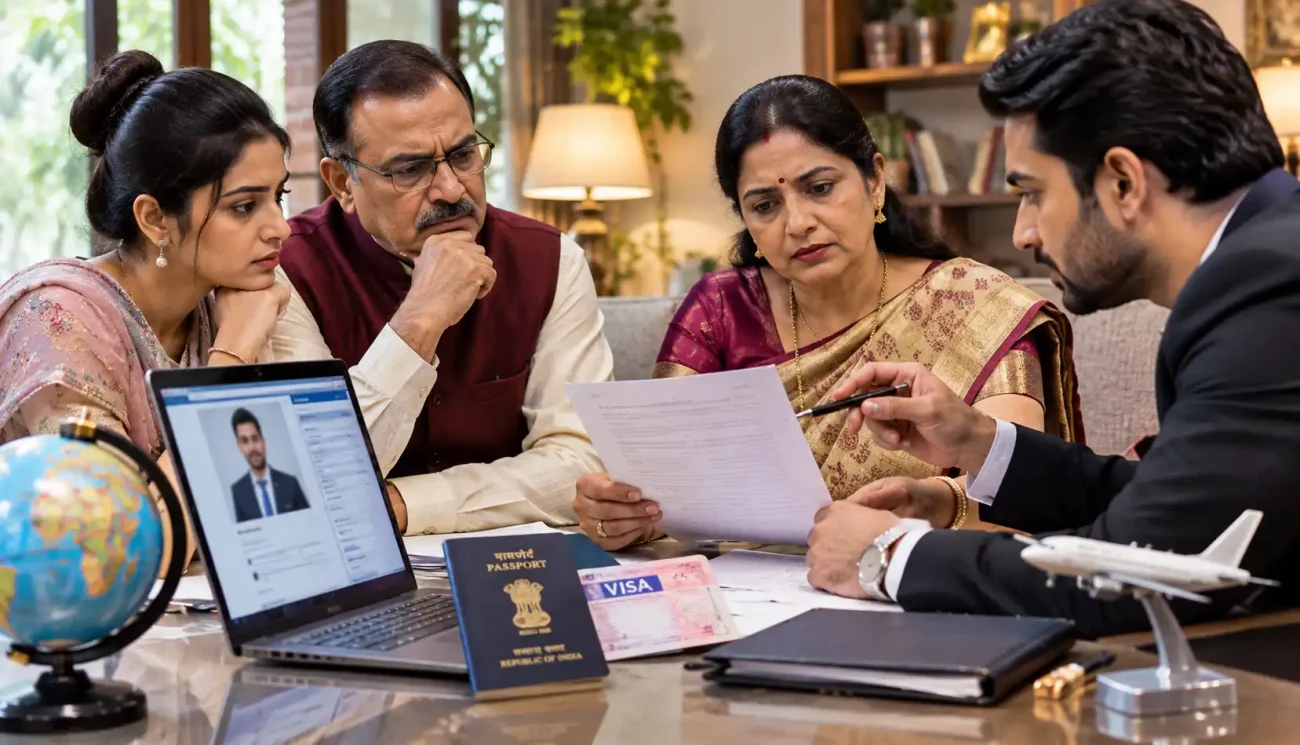
Family reviewing documents for a matrimonial background check on a prospective bride or groom

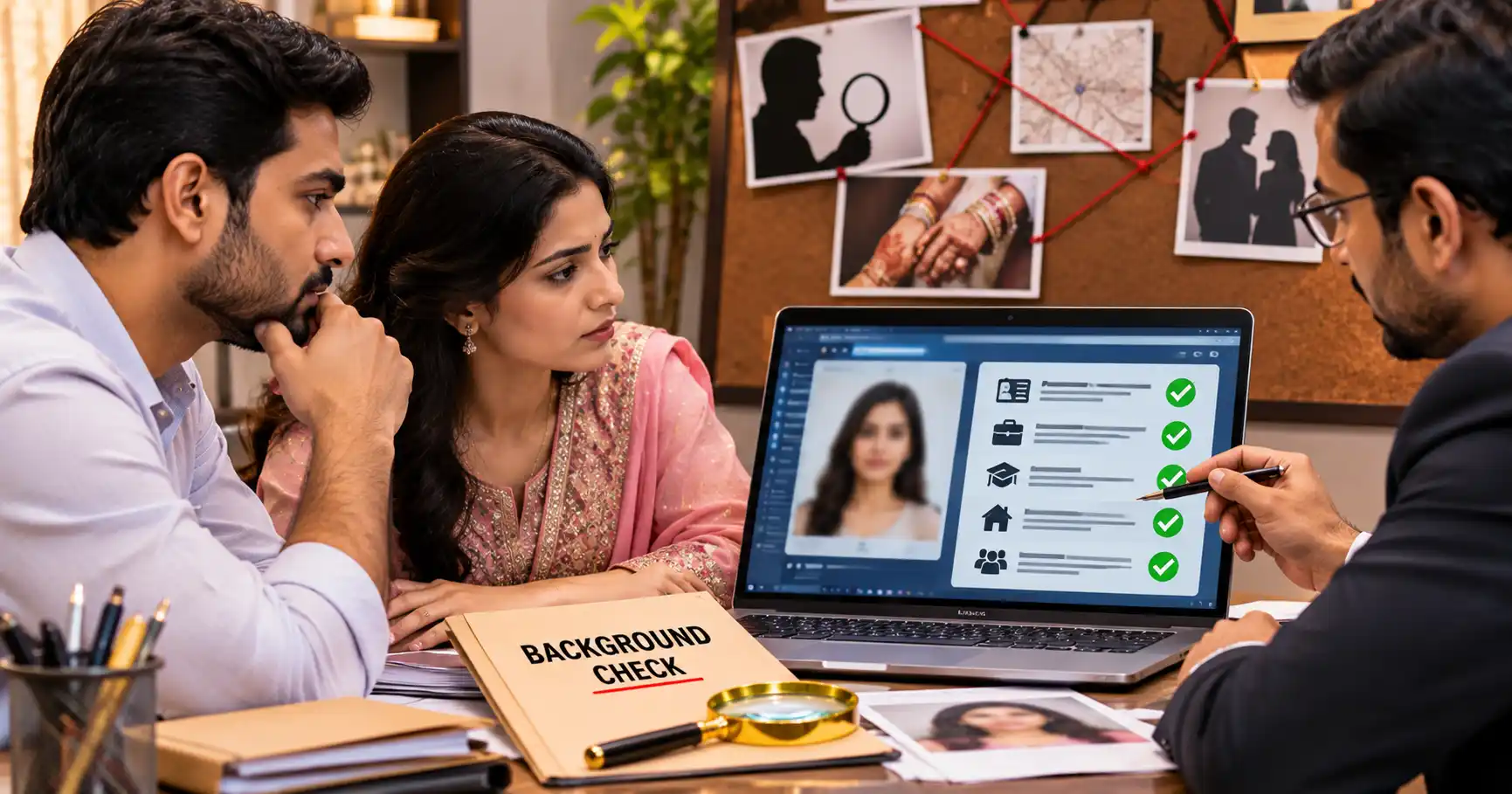
A marriage joins two families, so you should know exactly who you are marrying. Yet many families rely on a biodata, a few phone calls, and a good first impression. A matrimonial background check closes that gap. It confirms the facts about identity, job, marital status, family, and character before you commit. This guide explains how to conduct a background check on a prospective bride or groom, what to verify, and when to involve a professional.

What Is a Matrimonial Background Check?

A matrimonial background check is a lawful and confidential verification of a prospective spouse’s claims. It compares what the person and the family say with documents, public records, and independent sources.

Families use it for arranged matches, matrimonial-site matches, and love marriages that are heading towards engagement. It is also called pre-marriage verification or pre-matrimonial investigation.

Why Is a Background Check Important Before Marriage?

Profiles on matrimonial sites are largely self-reported. A polished profile does not prove the facts behind it. Meanwhile, families rarely have the time or contacts to cross-check every claim.

Here are the problems a background check often uncovers:

  • A hidden previous marriage or a pending divorce
  • Fake or exaggerated education, job, or income
  • Undisclosed criminal cases, loans, or debts
  • Hidden relationships, addictions, or lifestyle issues
  • A fake profile created by a scammer
  • A family with a history of dowry disputes

Checking early is easier, cheaper, and less painful than fixing the damage after the wedding.

How to Conduct a Matrimonial Background Check: Step by Step

one-number-round

Verify Identity and Age

Ask for a passport, PAN card, or voter ID. Then compare the name, date of birth, and photograph with the biodata. A birth or school certificate can confirm age. Any mismatch needs a clear explanation. If a document looks altered, forensic document analysis can test whether it is genuine.

two-number-round

Confirm Education

Request degree certificates and mark sheets. Next, verify them with the college or university. Also check that the institution is recognised. Fake degrees are more common than most families expect.

three-number-round

Check Employment and Income

Ask for an offer letter, recent payslips, and a company email address. After that, call the employer through its official website or HR number, not a number the match provides. A discreet employment verification check confirms the designation, tenure, and salary range.

four-number-round

Confirm Marital Status

Ask whether the person was married before. If yes, request the divorce decree or death certificate, and have a lawyer confirm that it is valid. In addition, check whether any matrimonial case is pending. Concealing a first marriage is one of the most serious frauds in this area.

five-number-round

Verify Family Background and Address

Visit the family’s home. Meet parents and siblings, and speak with neighbours, relatives, and society members. Confirm the address, property claims, and the family’s reputation. Genuine families rarely object to reasonable verification.

six-number-round

Review the Digital Footprint

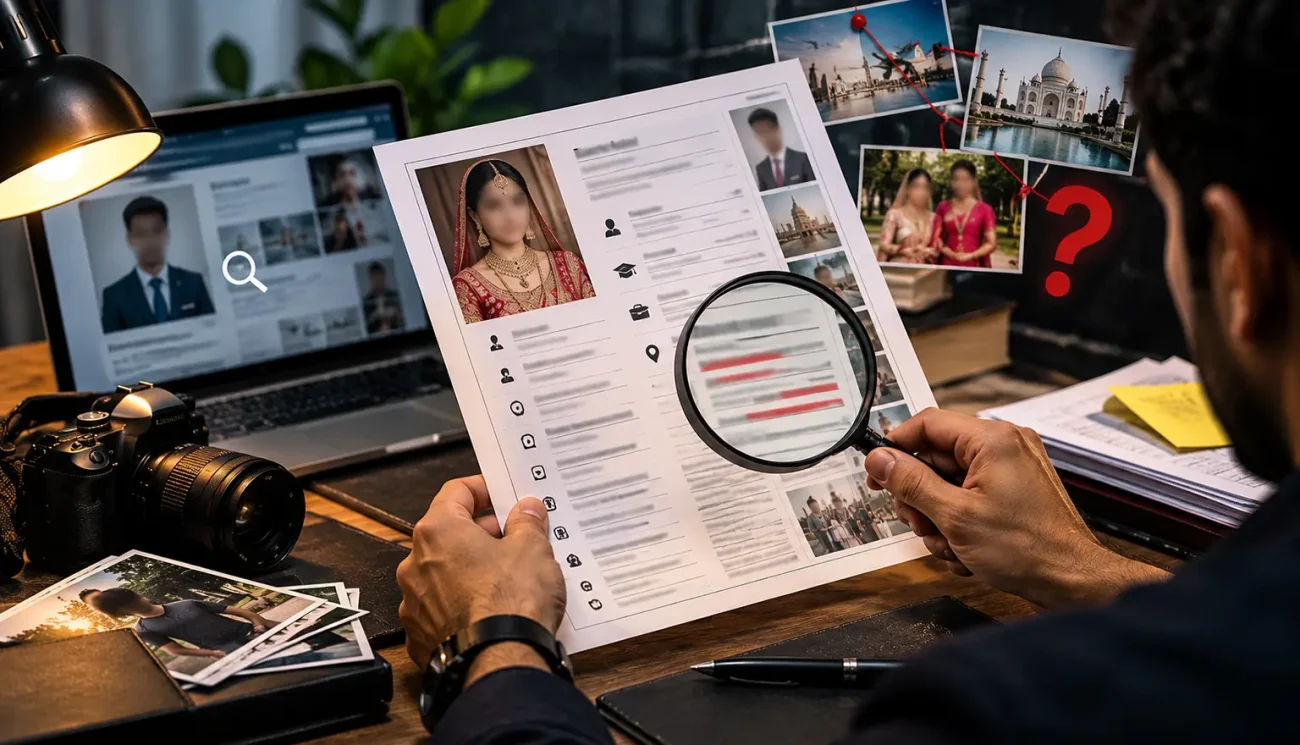
Study LinkedIn, Facebook, and Instagram profiles. Check the account age, photos, friend lists, and posts. Look for sudden changes or conflicting stories. A digital footprint investigation goes deeper, and social media investigation can confirm whether a profile is real. Our guide on identifying fake social media profiles explains the warning signs.

seven-number-round

Check Court and Financial Records

Search public court records through the eCourts portal using the person’s name. Look for criminal, civil, matrimonial, or cheque-bounce cases. Also ask about loans and dues. Name matches are common, so confirm any hit before drawing conclusions.

eight-number-round

Hire a Professional When Doubts Remain

Some facts cannot be verified from home. For these, a trained investigator uses lawful field inquiries and records checks, then submits a written report. A professional personal background verification gives you evidence instead of assumptions.

Matrimonial Background Check Checklist

What to verify

How to verify

Identity and age

Passport, PAN, birth or school certificate

Education

Degree copies, confirmation from the institution

Job and income

Offer letter, payslips, HR call, official email

Marital status

Divorce decree, court record search, lawyer’s check

Family and address

Home visit, neighbour and relative inquiries

Character and conduct

Social media review, professional field inquiry

Legal and financial issues

eCourts search, loan and dispute inquiry

Red Flags to Watch For

One red flag justifies a deeper check. Several together mean you should pause the proposal.

Is a Matrimonial Background Check Legal in India?

Yes, verification through lawful methods is legal. Reputable investigators use public records, document checks, and field inquiries. They do not use phone tapping, hacking, or illegal surveillance, and they respect privacy laws. Moreover, a properly documented report can support your decision if a dispute arises later. Read our article on whether private detective evidence can be used in Indian courts for more detail.

DIY Check or Professional Investigation?

You can handle documents, family meetings, and basic online searches yourself. However, a professional is the better choice when:

  • The match lives abroad (see our guide to NRI matrimonial investigation)
  • You suspect a hidden marriage or serious concealment
  • The family lives in another city and cannot visit
  • You want a confidential, written report

If the wedding has already taken place and doubts have started, a post-matrimonial investigation can help establish the facts.

Matrimonial Background Check in Mumbai and Across India

Confidential Case Files is a Mumbai-based detective agency that handles matrimonial cases for families in Mumbai, Thane, Navi Mumbai, Pune, Delhi, and other cities through its PAN India network. Local knowledge matters, because verifying a family’s reputation often requires on-ground inquiries in their own neighbourhood. Every case stays confidential, and the client receives a clear written report.

Frequently Asked Questions

What is a matrimonial background check?

It is a confidential verification of a prospective bride or groom’s identity, education, job, marital status, family, and character before marriage.

How long does a matrimonial background check take?

Basic checks often take 3 to 7 days. Cases that involve other cities or countries may take longer.

What documents are needed for verification?

Usually, you need the person’s full name, photograph, date of birth, address, workplace details, and family information. ID and employment documents help when available.

How much does a matrimonial background check cost?

The cost depends on the scope and the location. Confidential Case Files gives a fixed written quote after a free initial consultation.

Can I do a background check after the engagement?

Yes. Many families verify after the engagement and before the wedding. Doing it earlier, however, gives you more freedom to decide.

Final Thoughts

A good match rests on trust, and trust grows from verified facts. Check identity, education, work, marital history, family, and online presence. Watch for red flags, and ask for expert help when something does not add up. A thorough matrimonial background check protects your family before you take one of life’s biggest decisions.

Need a confidential verification?

Talk to Confidential Case Files for a free consultation. Every case runs under a written confidentiality commitment.

Leave a Reply

Your email address will not be published. Required fields are marked *